
Table of Contents
When it comes to selling a property in Richmond, a conveyancer can make the process smoother from start to finish. Not only can a Richmond conveyancer prepare and review key documents, but they can also manage buyer conditions, contract changes, and settlement details.
Besides, selling a home involves legal checks, strict timelines, and detailed paperwork. Missing even a small step can cause delays or disputes. A conveyancer handles these legal tasks with care, keeping the sale clear and on track.
They also act as a single point of contact during the sale, working with agents, buyers, and banks as needed. This helps reduce confusion, keeps communication clear, and ensures each step is completed at the right time.
With their knowledge of local rules and property laws, a Richmond conveyancer protects the seller’s interests from listing to settlement. Their support helps avoid costly errors and keeps the sale moving toward a proper close.
Top 7 Steps a Richmond Conveyancer Handles During a Property Sale
Whether you are selling your home or a commercial property in Richmond, a conveyancer can oversee the legal steps that move the sale from listing to settlement. These steps must follow a set order and align with required time frames. With a Richmond conveyancer by your side, you can focus on the sale with confidence, knowing the legal as well as administrative matters are being handled correctly.
Throughout the sale, the conveyancer in Richmond maintains oversight of the legal process and ensures it remains compliant with property law. Their involvement supports consistency and control as the transaction moves forward.
By overseeing each stage, the conveyancer helps maintain clarity throughout the sale. Sellers benefit from a structured process where legal requirements are handled correctly, allowing the transaction to progress toward settlement without unnecessary disruption.
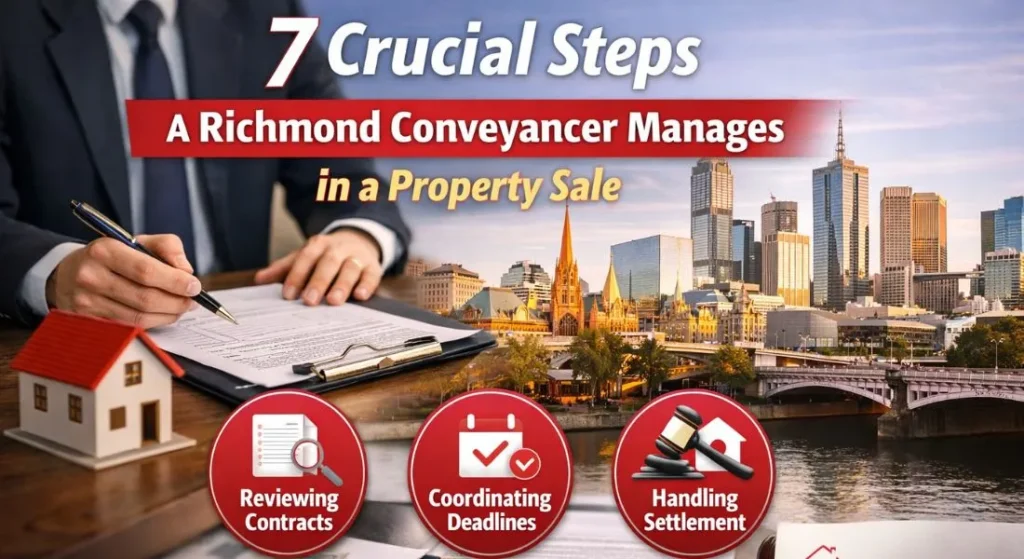
Here are seven steps a Richmond conveyancer handles during a property sale.
Gathers Required Property Documents
From title details to council and zoning information, the conveyancer collects all required documents, giving buyers confidence that they have accurate information and the sale proceeds without surprises. The conveyancer also ensures any certificates, approvals or legal disclosures needed for the contract are ready and complete.
Having all documents organised in advance helps the seller meet legal obligations, reduces the chance of delays, and allows buyers to review the property confidently before moving forward with the purchase.
Checks Legal Compliance
In addition to gathering required property documents, a conveyancer also ensures the property meets all legal requirements. This includes reviewing local council rules, zoning regulations, planning restrictions, and any mandatory disclosures. By verifying compliance early, the conveyancer helps prevent issues that could delay the sale.
The table below highlights the key tasks a conveyancer handles to maintain legal compliance.
| Task | Role of the Conveyancer |
| Review local rules | Checks council regulations, zoning as well as planning restrictions |
| Verify disclosures | Confirms all mandatory disclosures are complete |
| Early compliance check | Identifies potential legal issues before listing |
Prepares the Contract of Sale
Before a property changes hands, the conveyancer drafts and reviews the contract of sale to protect the seller’s legal and financial interests. The contract clearly outlines the sale price, settlement terms, and any special conditions, providing a framework that both parties can rely on.
By preparing a complete and well-structured contract, the conveyancer helps prevent disputes, keeps the transaction on track, and ensures the seller is protected throughout the sale process, giving confidence that the sale proceeds smoothly and securely.
Manages Contract Changes
Throughout the sale, the conveyancer oversees any contract changes, keeping the terms clear as well as compliant with legal requirements for the seller. This includes handling extensions, special conditions or amendments requested by the buyer or required by the transaction.
The Richmond conveyancer properly documents each change to make it legally binding, reducing the risk of disputes or misunderstandings.
Oversees Settlement Preparation
The conveyancer ensures everything is ready for settlement, checking financial details, deadlines, and documentation. They can also guide the seller through important legal requirements, such as Section 32 statements in Richmond property deals, helping avoid last-minute issues and protecting the seller’s interests as the transaction moves toward completion.
- Checks payout figures and adjusts rates or fees.
- Confirms loan settlements and financial arrangements are in order.
- Coordinates with all parties to ensure the settlement date is met.
Communicates with All Parties
During the property sale, the conveyancer keeps all parties informed, including buyers, agents, and lenders. The conveyancer keeps all parties informed about contracts, deadlines, and legal requirements, making sure responsibilities are clear. The conveyancer also responds to questions promptly and clarifies any uncertainties, helping to avoid confusion or delays.
By maintaining clear and consistent communication, the conveyancer protects the seller’s interests, ensures the transaction stays organised, and helps the sale progress smoothly toward settlement with confidence.
Finalises the Sale
Once all documentation and settlements are in place, the conveyancer oversees the completion of the transaction. They ensure that contracts are lodged correctly, funds are transferred, and the property title is legally registered. The conveyancer also verifies that all obligations and conditions have been met by both parties.
This careful handling protects the seller, prevents errors, and ensures a smooth closing. With the conveyancer managing these final steps, all documents as well as settlements are handled properly, allowing the seller to finalise the sale confidently.
Conclusion
A conveyancer plays a vital role in selling a property in Richmond, managing legal requirements, contracts, and settlements. Their expertise ensures compliance, prevents delays, and protects the seller’s interests. They can also guide sellers through important legal documents, like Section 32 property statements, keeping the transaction organised, reducing risks, and helping the sale conclude smoothly.
With a Richmond conveyancer handling these responsibilities, sellers can feel confident that their property sale will be completed efficiently and securely.
Are you looking for a reliable conveyancer to guide you through your Richmond property sale? Goodwill Conveyancing offers reliable conveyancing services, handling contracts, legal checks, and settlements with care.
Frequently Asked Questions
What documents does a conveyancer prepare during a property sale?
A conveyancer prepares the contract of sale, title documents, council and zoning information, and any required disclosures. These documents provide accurate details for the buyer and ensure the sale complies with legal obligations.
How does a conveyancer protect a seller’s interests?
A conveyancer makes sure all legal requirements are satisfied, checks contracts for errors, and confirms settlement figures are accurate. Their involvement reduces the risk of disputes, delays, and financial issues, keeping the sale safe and organised.
Can a conveyancer assist with both residential and commercial property sales?
Yes. A conveyancer has the expertise to manage legal requirements for both commercial and residential property sales, ensuring contracts, disclosures, and settlements meet the specific rules and regulations for each property type.
How early should a seller engage a conveyancer in Richmond?
A seller should engage a conveyancer before listing the property. Early involvement ensures all legal documents are prepared in advance and helps prevent delays or issues once a buyer makes an offer.
Read More Blogs
Conveyancer Richmond: Full Breakdown of Services, Fees & Local Options
What Is a Section 32? Why It Matters in Richmond Property Deals